
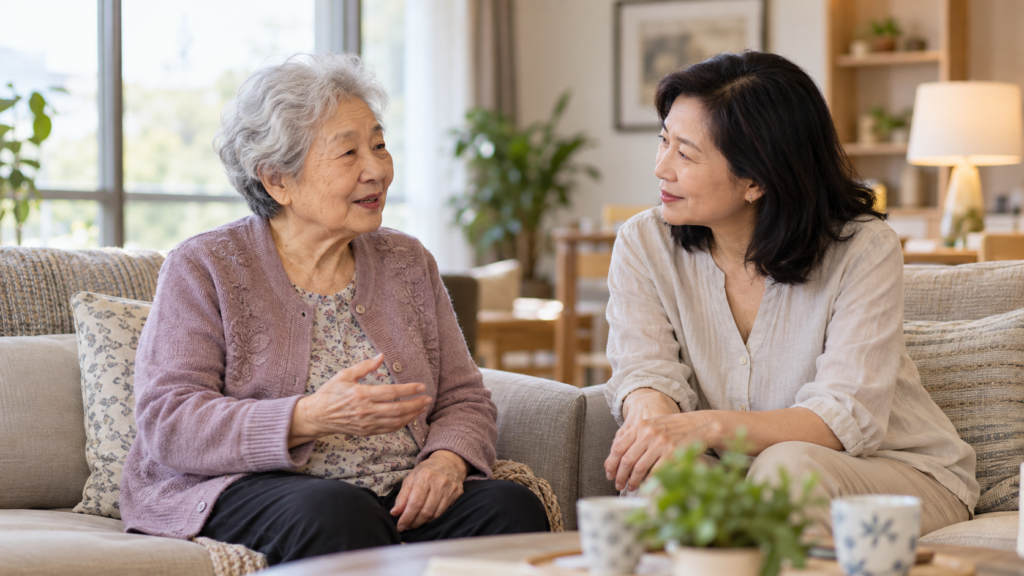
Being able to explain what hurts, ask a question or join a conversation matters every day. When you’re looking for long-term care for a Chinese-speaking parent, knowing they can communicate in their preferred language may be one of your biggest concerns.
But finding that information isn’t always straightforward. A home might mention culturally inclusive care without naming the languages available. Another might list Mandarin and Cantonese without explaining whether that support extends to personal care, activities or conversations with the nursing team.
Looking for a home where your parent can communicate in Mandarin or Cantonese? These six long-term care homes in Toronto, Richmond Hill and Markham are worth exploring. Here’s what each shares about language support, care and daily life.
Understanding the Language Support Available
Mandarin and Cantonese are distinct spoken languages, so it helps to be specific about which your parent uses most comfortably. Some families may also be looking for another Chinese language, such as Taishanese.
A published language listing doesn’t necessarily mean a staff member who speaks that language is available on every shift. Support may involve care staff, recreation programs, volunteers or interpretation services. The details are worth discussing directly with each home.
The homes below provide long-term care, which serves different needs from independent retirement living. This is a selection of homes to explore, rather than a ranking or a complete list.
Mon Sheong Home for the Aged: Downtown Toronto
Cantonese | Mandarin | Taishanese | English
Located on D’Arcy Street in the Kensington-Chinatown neighbourhood, Mon Sheong Home for the Aged has 105 long-term care beds. Its public health-service record lists Cantonese, Mandarin and Taishanese alongside English.
The specific mention of Taishanese is useful for families whose parent is most comfortable speaking it. The home’s listed services also include recreation programs, music therapy and a library. When speaking with the team, families can explore how their parent’s language would be supported during both care and social activities.
Mon Sheong Scarborough Long-Term Care Centre: Scarborough
Cantonese | Mandarin | English
Mon Sheong Scarborough Long-Term Care Centre is on McNicoll Avenue near Kennedy Road. Its service record identifies Cantonese, Mandarin and English, along with 24-hour nursing and personal care.
Mon Sheong’s long-term care services include Chinese cuisine and activities such as exercise, arts and crafts, and music. For families considering this location, a conversation about meals and programming can help clarify how familiar food and language are reflected in everyday routines.
Mon Sheong Richmond Hill Long-Term Care Centre: Richmond Hill
Cantonese | Mandarin | English
For families considering York Region, Mon Sheong Richmond Hill Long-Term Care Centre is located at 11199 Yonge Street. Its service record lists Cantonese, Mandarin and English, with Chinese dishes forming the main menu.
A secure courtyard or garden and a library are also listed. An online virtual tour is available through Mon Sheong’s website, allowing families to explore the space and prepare questions before arranging a visit.
Yee Hong Ho Lai Oi Wan Centre: Markham
Cantonese | Mandarin
Yee Hong Ho Lai Oi Wan Centre is a 200-bed long-term care home on Bur Oak Avenue. Its home-specific service record lists Cantonese and Mandarin among the available languages and identifies Chinese menu options.
Yee Hong describes culturally and linguistically appropriate services as part of its approach to care. Families can ask how this works at the Markham home, including which activities use their parent’s preferred language and how communication is supported during personal and nursing care.
Cummer Lodge: North York
Cantonese | Mandarin
The City of Toronto operates Cummer Lodge on Cummer Avenue. Its health-service record lists Cantonese and Mandarin, but explicitly notes that staff language availability is not guaranteed. External translation or interpretation services may be available.
That qualification gives families an important question to ask: what happens when a resident needs help and nobody on duty speaks their language? Understanding the arrangements can help families assess how communication would work throughout the day and overnight.
Fudger House: Downtown Toronto
Cantonese | Mandarin
Fudger House is a City-operated long-term care home on Sherbourne Street. The City identifies Cantonese and Mandarin among its language, cultural and community partnerships. Its health-service record also lists both languages.
Families can ask what those partnerships mean for residents, including whether support comes through care staff, activities, volunteers or interpretation arrangements. This helps turn a general language listing into a clearer picture of the support their parent could receive.
Questions to Bring Into the Conversation
Once you have a few homes to explore, ask about situations your parent would encounter:
- Who can communicate with them in Mandarin or Cantonese during personal care, including evenings and weekends?
- How would they discuss symptoms, medications or changes in care?
- Which activities are offered in their preferred language?
- How are language preferences recorded and shared with staff?
Familiar meals and cultural celebrations may matter to your parent, too. Include their preferences in these conversations wherever possible. Knowing what helps them feel comfortable, understood and involved gives you something concrete to discuss with each home.
Explore the individual listings and use what you learn to prepare for your next conversation.
Information was checked at the time of writing. Services, amenities and availability may change. Please confirm current details directly with each home. Find Senior Places provides information to support your research and does not rank or endorse the homes featured.